In today’s hyper-competitive B2B landscape, a solid b2b marketing strategy isn’t just helpful—it’s essential. Whether you’re scaling a startup or optimizing an enterprise, the right approach can unlock growth, build authority, and turn leads into loyal clients.
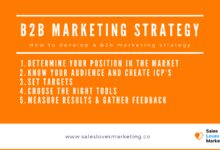



Understanding the Core of a B2B Marketing Strategy

A b2b marketing strategy is fundamentally different from B2C. It’s not about impulse buys or emotional triggers—it’s about logic, ROI, and long-term value. Businesses buy to solve problems, improve efficiency, or gain a competitive edge. That means your strategy must speak directly to decision-makers with precision, credibility, and clarity.
What Defines B2B vs. B2C Marketing?
The core distinction lies in the buyer journey. B2B purchases involve multiple stakeholders, longer sales cycles, and higher stakes. A single decision might require input from procurement, finance, IT, and executive leadership. This complexity demands a more structured, data-driven b2b marketing strategy.
- B2B: Rational, relationship-based, long sales cycles
- B2C: Emotional, individual-driven, short decision windows
- B2B: Focus on ROI, scalability, integration
In contrast, B2C marketing often leverages mass appeal and instant gratification. B2B, however, thrives on trust, proof, and performance. According to HubSpot, 68% of B2B buyers expect content that speaks directly to their industry challenges—proof that relevance is king.
The Role of Decision-Makers in B2B Strategy
Unlike B2C, where one person might make a purchase, B2B decisions are often made by committees. Your b2b marketing strategy must account for various personas: the technical evaluator, the budget holder, the end-user, and the executive sponsor. Each has different priorities and pain points.
“In B2B, you’re not selling to a person—you’re selling to a process.” — Marketing Executive, Salesforce
For example, a CFO cares about cost savings and ROI, while a CTO focuses on integration, security, and scalability. A successful b2b marketing strategy creates tailored messaging for each stakeholder, ensuring alignment across the board. Tools like buyer persona mapping and stakeholder analysis are critical in this phase.
Essential Components of a Winning B2B Marketing Strategy
A powerful b2b marketing strategy isn’t built on guesswork. It’s a deliberate framework combining audience insight, content, channels, and measurement. Let’s break down the core components that make it work.
Clear Target Audience and Buyer Personas
You can’t market effectively if you don’t know who you’re talking to. Start by defining your Ideal Customer Profile (ICP). This includes firmographics (industry, company size, revenue) and technographics (software stack, infrastructure).
Next, develop detailed buyer personas. For example:
- CTO Carla: Tech-savvy, values innovation, concerned about system integration
- Procurement Paul: Focused on cost, compliance, and vendor reliability
- Operations Olivia: Needs efficiency, ease of use, and minimal downtime
According to CMO.com, companies using detailed buyer personas see up to 2x higher conversion rates in their B2B campaigns.
Content That Educates, Not Just Sells
In B2B, content is the currency of trust. Your audience isn’t looking for flashy ads—they want insights, data, and solutions. A strong b2b marketing strategy prioritizes educational content that guides buyers through their journey.
Examples include:
- Whitepapers and research reports
- Case studies showcasing real-world results
- Webinars with industry experts
- Comparison guides (e.g., “Tool A vs. Tool B”)
Content should align with the buyer’s stage: awareness, consideration, or decision. For instance, a blog post titled “5 Signs Your CRM Is Holding Back Growth” targets awareness, while a demo video speaks to the decision stage.
Multi-Channel Distribution for Maximum Reach
Even the best content fails if no one sees it. A robust b2b marketing strategy uses a mix of owned, earned, and paid channels to amplify reach.
Key channels include:
- LinkedIn: The #1 platform for B2B engagement
- Email Marketing: High ROI for nurturing leads
- Search Engine Optimization (SEO): Critical for visibility
- Paid Ads (Google, LinkedIn): For targeted outreach
- Events & Webinars: Build authority and trust
A study by Marketing Dive found that 73% of B2B marketers consider LinkedIn the most effective social platform for lead generation.
7 Proven B2B Marketing Strategy Tactics for 2024
Now that we’ve covered the foundation, let’s dive into seven high-impact tactics that define a winning b2b marketing strategy in 2024. These aren’t just trends—they’re proven methods backed by data and real-world success.
1. Account-Based Marketing (ABM)
ABM flips traditional marketing on its head. Instead of casting a wide net, you target specific high-value accounts with personalized campaigns. This hyper-focused approach aligns sales and marketing teams around shared goals.
How it works:
- Identify 10–50 strategic accounts
- Research key stakeholders and pain points
- Create custom content and outreach (e.g., personalized videos, direct mail)
- Track engagement and pipeline impact
According to ABM Institute, companies using ABM report 200% higher sales pipeline and 50% faster deal velocity.
“ABM isn’t a tactic—it’s a mindset shift from volume to value.” — Forrester Research
2. Data-Driven Personalization at Scale
Personalization isn’t just about using someone’s name in an email. In a modern b2b marketing strategy, it means delivering the right message, to the right person, at the right time—automatically.
Leverage tools like:
- Customer Data Platforms (CDPs)
- Marketing automation (e.g., HubSpot, Marketo)
- AI-powered content recommendations
For example, a visitor from a healthcare company sees case studies from hospitals, while a manufacturing firm sees ROI calculators for production efficiency. This level of personalization increases engagement by up to 40%, per Gartner.
3. Thought Leadership and Content Authority
In B2B, credibility sells. A strong b2b marketing strategy positions your brand as a trusted advisor, not just a vendor. Thought leadership builds that trust.
Ways to establish authority:
- Publish original research and industry reports
- Secure speaking slots at major conferences
- Contribute guest articles to top-tier publications (e.g., Harvard Business Review)
- Host expert roundtables or podcasts
Companies like Salesforce and HubSpot dominate their markets not just through product quality, but through consistent thought leadership. As Harvard Business Review notes, 75% of B2B buyers are more likely to buy from a brand they perceive as a thought leader.
Leveraging Technology in Your B2B Marketing Strategy
Technology is no longer optional in a b2b marketing strategy—it’s the engine. From automation to analytics, the right tools can multiply your impact and reduce manual effort.
Marketing Automation Platforms
Automation allows you to nurture leads without constant manual intervention. Platforms like HubSpot, Marketo, and Pardot enable:
- Lead scoring based on behavior
- Drip email campaigns
- CRM integration for seamless handoff to sales
For example, a lead who downloads a whitepaper can automatically receive a follow-up email with a case study, then a demo offer—all without human input. This not only saves time but ensures consistency.
CRM Integration for Sales Alignment
One of the biggest gaps in B2B is the disconnect between marketing and sales. A b2b marketing strategy must include CRM integration to close that loop.
When marketing and sales share the same data:
- Sales teams know which leads are hot
- Marketing can measure conversion impact
- Customer experience becomes seamless
Salesforce reports that companies with aligned sales and marketing see 36% higher customer retention and 38% higher sales win rates.
AI and Predictive Analytics
Artificial intelligence is transforming b2b marketing strategy by predicting buyer behavior. AI tools can:
- Identify high-intent leads based on online behavior
- Recommend content based on user history
- Optimize ad spend in real time
For instance, 6sense’s AI platform uses predictive analytics to score accounts based on buying signals, helping marketers focus on those most likely to convert. Early adopters report up to 30% increase in pipeline efficiency.
Measuring Success: KPIs for Your B2B Marketing Strategy
You can’t improve what you don’t measure. A mature b2b marketing strategy includes clear KPIs to track performance and guide decisions.
Lead Quality Over Quantity
In B2B, not all leads are created equal. A high volume of unqualified leads wastes sales time. Instead, focus on lead quality metrics:
- Marketing Qualified Leads (MQLs)
- Sales Qualified Leads (SQLs)
- Lead-to-customer conversion rate
Use lead scoring models to rank prospects based on demographics, behavior, and engagement. This ensures sales teams prioritize the most promising opportunities.
Customer Acquisition Cost (CAC) and ROI
Every dollar spent must be justified. Track your Customer Acquisition Cost (CAC) and compare it to Customer Lifetime Value (CLV).
Formula: CAC = Total Marketing Spend / Number of New Customers Acquired
A healthy B2B business typically has a CLV:CAC ratio of 3:1 or higher. If your CAC is too high, revisit your targeting or channel mix.
Funnel Velocity and Sales Cycle Length
How fast do leads move through your funnel? Funnel velocity measures the speed and efficiency of your b2b marketing strategy.
Key factors:
- Average deal size
- Conversion rates at each stage
- Time spent in each funnel stage
Improving funnel velocity can shorten sales cycles by weeks or even months—critical in competitive markets.
Common B2B Marketing Strategy Mistakes to Avoid
Even experienced marketers fall into traps. Here are the most common pitfalls in a b2b marketing strategy and how to avoid them.
Ignoring the Buyer’s Journey
Many B2B campaigns fail because they assume everyone is ready to buy. In reality, most prospects are in the awareness or consideration stage.
Solution: Map your content to each stage of the buyer’s journey. Use top-of-funnel content (blogs, infographics) to attract, middle-funnel (webinars, case studies) to educate, and bottom-funnel (demos, trials) to convert.
Poor Sales and Marketing Alignment
When sales and marketing don’t speak the same language, leads fall through the cracks. Misalignment leads to finger-pointing and lost revenue.
Solution: Hold regular sync meetings, use shared KPIs, and implement Service Level Agreements (SLAs) between teams. For example, marketing commits to delivering 50 SQLs/month, and sales commits to contacting each within 24 hours.
Overlooking Post-Sale Marketing
Many b2b marketing strategy efforts stop at the sale. But retention and expansion are where real profit lies.
Solution: Implement customer marketing programs:
- Onboarding emails
- Customer success stories
- Upsell/cross-sell campaigns
According to Forrester, increasing customer retention rates by 5% increases profits by 25% to 95%.
Future Trends Shaping B2B Marketing Strategy
The B2B landscape is evolving fast. To stay ahead, your b2b marketing strategy must adapt to emerging trends.
Rise of Interactive and Immersive Content
Static content is losing ground. Buyers want experiences. Interactive content like ROI calculators, configurators, and virtual product tours engage users and capture data.
Example: A SaaS company offers a “Cost Savings Calculator” where prospects input their current spend and see potential savings. This not only educates but generates high-intent leads.
Video as a Core B2B Channel
Video is no longer just for B2C. In B2B, explainer videos, customer testimonials, and product demos drive engagement.
Stats from Wyzowl show that 91% of B2B marketers use video, and 96% say it helps with lead generation.
Privacy-First Marketing in a Cookieless World
With third-party cookies fading, B2B marketers must shift to first-party data strategies. This means building owned audiences through gated content, email lists, and community engagement.
Strategies include:
- Value-exchange content (e.g., free tools in return for email)
- Zero-party data collection (e.g., preference centers)
- Contextual advertising over behavioral targeting
Companies that adapt early will maintain visibility and trust in a privacy-centric world.
Building a Scalable B2B Marketing Strategy Framework
A successful b2b marketing strategy isn’t a one-off campaign—it’s a repeatable system. Here’s how to build a framework that scales.
Start with a Strategic Audit
Before building anything new, assess your current state:
- What’s working? (e.g., high-performing content, channels)
- What’s underperforming? (e.g., low email open rates)
- What’s missing? (e.g., no ABM, weak SEO)
Use tools like SWOT analysis or a marketing maturity model to identify gaps.
Set SMART Goals
Define Specific, Measurable, Achievable, Relevant, and Time-bound goals. For example:
- Increase MQLs by 30% in 6 months
- Reduce CAC by 15% through channel optimization
- Launch an ABM program targeting 20 enterprise accounts
Clear goals align teams and provide a benchmark for success.
Implement, Test, Optimize
No b2b marketing strategy is perfect from day one. Use A/B testing, pilot programs, and feedback loops to refine your approach.
Test variables like:
- Email subject lines
- Landing page designs
- Ad copy and visuals
Continuously analyze results and double down on what works.
What is the most important element of a b2b marketing strategy?
The most important element is understanding your buyer. Without deep insight into your customer’s pain points, goals, and decision process, even the most creative campaigns will fall flat. Invest in buyer research, persona development, and journey mapping to build a strategy that resonates.
How long does a B2B marketing strategy take to show results?
B2B marketing is a long game. While some tactics like paid ads can generate leads quickly, most strategies (e.g., SEO, thought leadership) take 6–12 months to show significant impact. Consistency and patience are key.
Can small businesses use advanced b2b marketing strategy tactics like ABM?
Absolutely. ABM isn’t just for enterprises. Small businesses can practice “ABM Lite” by focusing on 5–10 high-potential accounts with personalized outreach. The principles scale down effectively.
How do I align sales and marketing in my b2b marketing strategy?
Start with shared goals and regular communication. Use a CRM to track leads collaboratively, define clear handoff processes, and hold joint planning sessions. Tools like Slack or Microsoft Teams can facilitate real-time collaboration.
Is content marketing still effective for B2B?
More than ever. 87% of B2B buyers start their journey with a search engine. High-quality, educational content builds trust, improves SEO, and nurtures leads. Focus on depth, relevance, and value over volume.
A winning b2b marketing strategy combines deep customer insight, strategic content, multi-channel execution, and continuous optimization. By focusing on value, alignment, and data, you can build a system that drives predictable growth. The future of B2B belongs to those who adapt, test, and lead with purpose.
Further Reading:
